

Persona: Non Traditional DTC (Perishable Goods)
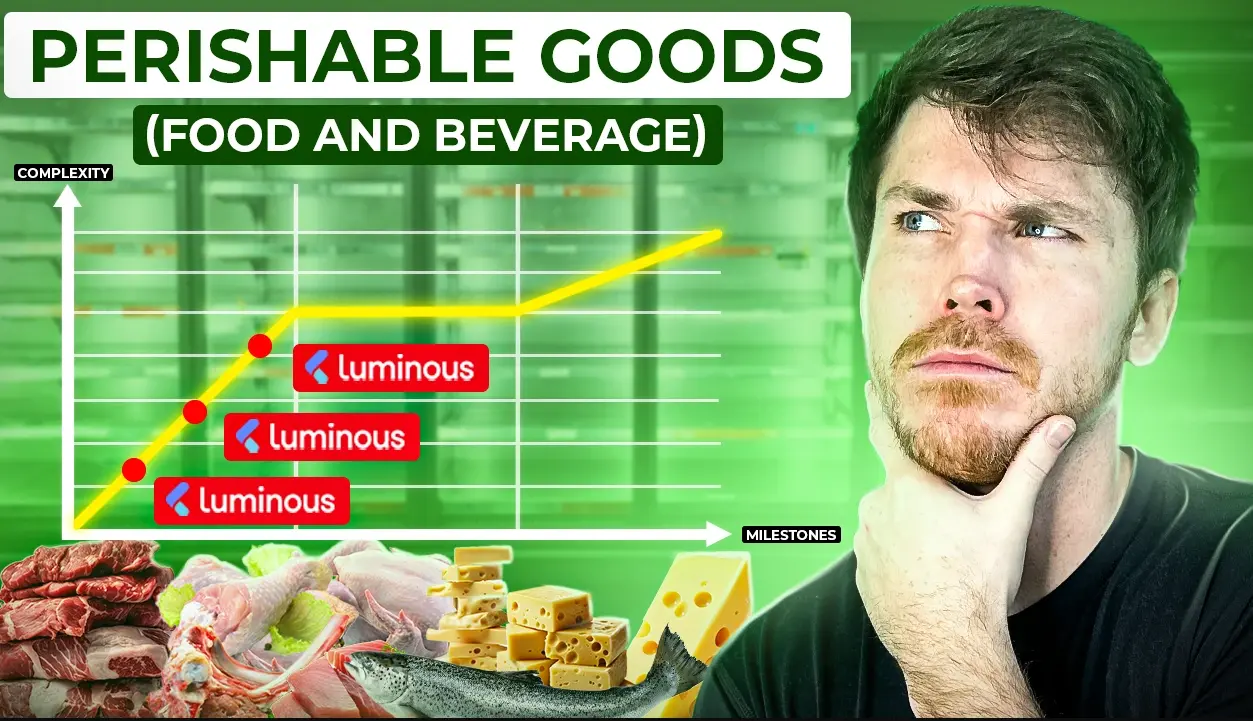


- Beyond Industry: Understanding Your Operational Archetype
- The Non-Traditional DTC Challenge
- Why the Complexity?
- Johnny's Meat Headache: A Case Study
- Johnny's Struggle in Action
- The Software Trap: Big or Busted?
- The Luminous Solution
- The Takeaway: Complexity Doesn't Have to Stop You
- Are You a Non-Traditional DTC Business?
The world of e-commerce software can be overwhelming. Everyone from NetSuite to smaller solutions claim to be the perfect fit. But the truth is, e-commerce businesses are not one-size-fits-all. Jared, founder of Luminous (a supply chain solution company), dives into a specific challenge faced by businesses selling perishable goods directly to consumers (DTC).
Beyond Industry: Understanding Your Operational Archetype
This blog focuses on the non-traditional DTC archetype. These businesses, unlike traditional DTC companies, experience massive complexity early on in their growth. Think meat, fish, dairy – products typically not associated with DTC models.
The Non-Traditional DTC Challenge
Proposing a framework to help businesses find the ideal balance, he presents a graph with complexity on the Y-axis and time/business growth on the X-axis. Ideally, businesses should implement processes and software that correspond with their growth trajectory.
Why the Complexity?
- Early Regulatory Hurdles: Unlike traditional DTC, non-traditional companies grapple with compliance issues like lot tracking and traceability before reaching significant revenue.
- Specialized Packaging and Cold Chain Logistics: Keeping perishable goods fresh requires specific packaging and cold chain logistics – a whole new level of complexity compared to simply shipping from a warehouse.
- Subscription Model Mayhem: Subscriptions add another layer of complexity to inventory forecasting and management.
- Juggling Sales Channels: Many non-traditional DTC companies find themselves catering to both direct-to-consumer and wholesale channels, adding further complexity.
Johnny's Meat Headache: A Case Study
Imagine Johnny, a meat wholesaler, deciding to launch a DTC business. Suddenly, he's facing all the challenges above – way before hitting a million dollars in revenue.
Johnny's Struggle in Action
- From Experimental Chaos to Regulatory Compliance: Johnny starts with basic packaging, but quickly needs a system for lot tracking and traceability.
- Cold Chain Conundrum: Johnny can't just use a standard 3PL. He needs a system to manage disassembly, butchering, cold storage, and transfers to fulfillment for his perishable products.
- Subscription Surprise: A seemingly simple addition, a subscription model throws a wrench into Johnny's inventory forecasting.
- The Wholesale Wild Card: Specialty retailers come calling, adding another sales channel to the mix.
- Direct Sourcing: To cut costs, Johnny starts buying direct from farmers.
The Software Trap: Big or Busted?
Traditional solutions like NetSuite are overkill for Johnny's sub-million dollar business, with hefty implementation costs and monthly fees. Smaller solutions might be affordable, but they lack the functionality to address Johnny's specific needs, like plugging into cold storage, acting as the WMS at his warehouse, lot tracking, and forecasting for subscriptions.
The Luminous Solution
Luminous is designed to handle the complexities non-traditional DTC businesses face. It offers:
- Affordable Pricing: Unlike NetSuite, Luminous serves companies below the million-dollar revenue mark with pricing that won't break the bank.
- Comprehensive Functionality: Luminous is built to handle Johnny's complexity markers, from lot tracking and cold storage visibility to subscription forecasting.
- Focus on Early-Stage Businesses: Luminous understands the unique needs of non-traditional DTC companies before they reach major scale.
The Takeaway: Complexity Doesn't Have to Stop You
The good news? If you can overcome the early complexity hurdle, the growth curve for non-traditional DTC businesses smooths out. By choosing the right software solution, you can avoid the headache and focus on growing your business.
Want to compare archetypes? See Jared's breakdowns of DTC brands and omnichannel brands.
Are You a Non-Traditional DTC Business?
If you're selling perishable goods directly to consumers and feeling overwhelmed, Luminous can help. We offer affordable software solutions designed to tackle your unique challenges. Book a demo today and see how we can help you streamline your operations and achieve growth.
Video transcript
Why Choosing Back-End Software Is So Hard
If you're an e-commerce operator looking to implement back-end software for your business, this video is for you. Look, you've got everybody from NetSuite down to SkuVault saying they're the best software for your business.
The reason it's so difficult to know if a software is going to be good for your business is this: e-commerce operations are not straightforward. For example, I could implement two supplement companies today that operate totally differently. Even though they're in the same category, their tech needs are totally different.
So you can't just look to see if the software services your industry. You have to see if it actually services your operational archetype. I promise you, if you understand your operational archetype, you will feel way less pain when you implement back-end software. So today I'm going to go over a better way to categorize yourself, so you can make better back-end tech decisions for your business.
What Is Non-Traditional DTC?
Okay guys, for our next archetype, we have the non-traditional DTC. So what is non-traditional DTC? Well, it's the opposite of traditional DTC. The defining attribute of this archetype is that their supply chain gets mega complex at an early stage.
Non-traditional direct-to-consumer companies really boomed during COVID. Think perishables, animal products — anything dairy-related, meat, fish. These are verticals you traditionally don't see in a direct-to-consumer business or on a direct-to-consumer sales platform. They exploded during COVID, and now there are a lot of non-traditional direct-to-consumer companies going through this complexity arc right here.
Again, what I'm mapping out here is where non-traditional DTC brands get complex, and specifically where the pain is in implementing processes and software. The reason I'm sharing this is I hope you can make sense of why you feel so complicated, so that you can make better tech, process and hiring decisions. I have a lot of empathy for non-traditional DTC founders. A lot.
We've got some brand examples over here. Most of these brands are shaving off a smaller sliver of a much broader market. We've got a couple of examples, like a meat company, a fish company and a cheese company. There are a lot of these direct-to-consumer brands out there right now.
Meet Johnny
So let's go to our entrepreneur example. This right here is Johnny. Johnny is starting a direct-to-consumer meat company. He's really passionate about this. He's already been selling wholesale meat through normal distribution channels for decades, and during COVID, he's like, “You know what? I'm going to pivot my business model. We're going to start a direct-to-consumer company.”
Little did Johnny know, he just got into the most complex e-commerce archetype imaginable. Let me explain why. I have a lot of empathy for these founders because they get so complex so early, and it feels like there's no system that can service their level of complexity.
Stage One: Experimental Madness
So let's dive into their complexity markers. Just to explain: on the y-axis you have complexity. These are the decisions in your business that add operational complexity. On the x-axis you have milestones, so this is growth of revenue over time, and I've divided it into stages.
Our first stage is experimental madness, and this is pure madness. As you can see here, Johnny's brain is exploding. He cannot handle this business at this point because it feels so complex. That's because during experimental madness, instead of slowly easing into the complexity, they have to handle peak complexity of the business, all before $1 million in revenue.
Lot Tracking and Regulatory Compliance
Here are the things they have to uniquely address early on that other companies don't. When he first starts, he's just slapping some meat in a custom packaging box he has lying around and trying to see if this thing will sell on Shopify. Boom, it does, almost immediately.
Then he gets hit with regulatory compliance issues by his sales channels, and he has to quickly find a system that will do lot tracking with full traceability back to its source. He doesn't even have an inventory system at this point, but he has to find a way to provide something like this so he can actually do real regulatory compliance and track what's going on.
Specialized Packaging and Cold Chain Logistics
He has to immediately source specialized packaging that will keep his meat fresh and get it to his customer. He also has to handle cold chain logistics, which is — oh my God — it is so complicated.
Instead of just buying something from China, sticking it in a 3PL and fulfilling it, he's got to buy cows, disassemble them into cuts, send them to a butcher, send them to a freezer and cold storage, and then transfer them to his fulfillment warehouse, where they get shipped out. And the margin for error on this is very low. This is insane to figure out.
All of a sudden, he has to have full visibility and a system that works for one person running this entire operation: disassembling from the cows, tracking what's at the butcher, tracking what's in cold storage, and easily transferring from cold storage to fulfillment.
Subscriptions, Wholesale and Direct Sourcing
On top of that, as if it weren't complex enough, he added a subscription model. These companies do really well with subscription models. So he's like, “Shoot, it's what the customer is asking for. I guess we need to do it.” He implements Recharge on Shopify, and boom, he's in the subscription business. But what he didn't account for is that a subscription business makes inventory and forecasting really difficult.
On top of that, he starts getting approached by some of his specialty wholesale accounts. Coming out of COVID, people are more open to buying things in storefronts, so a lot of the specialty retailers are reaching out to him again: “Hey man, remember me? Let's do some more business.” And he's like, “Sure.”
And then there's direct sourcing of ingredients. He's now buying direct from the farmers to cut costs.
Peak Complexity Before $1 Million
Long story short, all before a million dollars in revenue, Johnny needs one of the most complex systems on the market to handle his complexity. It's ridiculous. And what he's using right now is a million Google Sheets and ShipStation, and it is a pain in the ass.
Where Luminous Comes In
Where Luminous comes in with a lot of this complexity is that we are actually the only system on the market that can service a company that is sub-$1 million in revenue and solve for all these complexity markers. And our pricing is such that we're not trying to put you out of business.
We're not a NetSuite that's going to come in and quote a sub-$1 million business a minimum $50K implementation and a minimum of $2,000 to $3,000 a month all in. A sub-million-dollar business can't afford that. All they can afford is to pay something like $500 a month.
On top of that, a lot of the point solutions — the smaller solutions — might cost $300 to $500 a month, but they can't handle all of this. They can't plug into your cold storage and see what's there. They can't be the WMS at your warehouse. They don't have lot tracking. They don't handle forecasting and inventory for a subscription model.
Like I said, I have great empathy for these companies, which is why I want to get this message in front of as many non-traditional DTC companies as possible. Hey guys, if you're sub-$1 million in revenue and you feel like your brain is exploding, and you need help with your software and processes at a price that's not going to break the bank, come book a demo with us. We can help solve a lot of your problems.
The Good News
The good part about the non-traditional DTC archetype is that if they get past this sub-$1 million phase and go into their next phase — basically perfecting the operations they've already gotten themselves into — the complexity curve stays relatively flat. It doesn't get much more complex over time; it just grows slowly with more and more volume.
So if you can solve a lot of this early, you're set up so well to take a chunk of your market and just keep operating and focusing on sales and marketing.
So that is our non-traditional DTC. If you're a business in one of these markets, or something very similar, and you can't outsource to a 3PL because of your complexity, Luminous is an excellent fit for you, and we can help solve that complexity at a price that doesn't break the bank.