

Persona: Wholesale/Retail First


- Big Box First: The E-commerce Brand That Grew Up Retail
- The Growth Curve: Complexity Comes Later
- The Exploration Stage: Landing Your First Big Order
- Channel Optimization: Manual Processes Still Work
- The Expansion Stage: Complexity Explodes
- The Breaking Point: The Need for Automation
- Luminous: The Perfect Fit for Big Box First Types
- Are You a Big Box First Brand?
Choosing the right backend software is crucial for any e-commerce business, but a one-size-fits-all approach just doesn't work. Here at Luminous, we understand that different e-commerce models have unique needs. Today, we'll focus on the Big Box First archetype.
Big Box First: The E-commerce Brand That Grew Up Retail
Unlike the Direct-to-Consumer (DTC) model, Big Box First companies build their entire operation around big-box retail and wholesale early on. They secure deals with big-box stores like Costco before venturing into direct-to-consumer sales. Many of these brands started in the '90s or early 2000s, when that was the traditional route. This creates a distinct operational path, and a lot of these brands are underserved on the tech side.
The Growth Curve: Complexity Comes Later
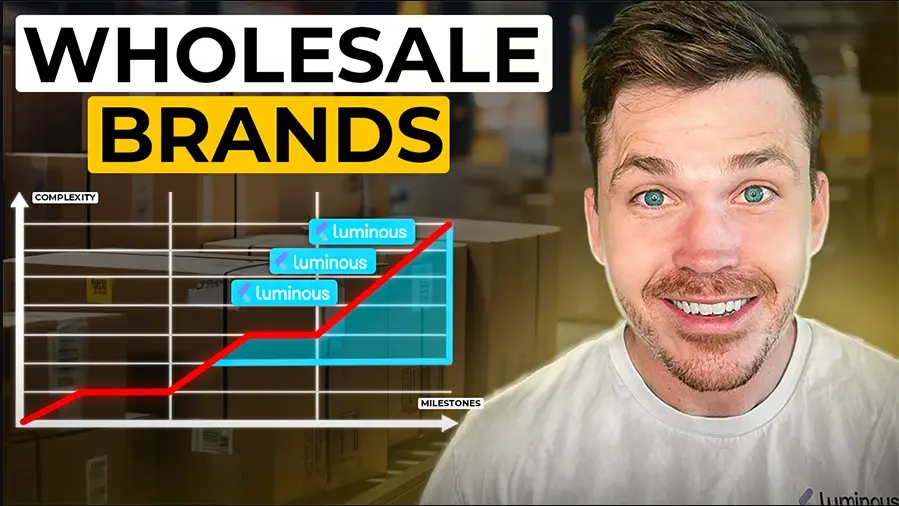
Imagine a graph with complexity on the Y-axis and milestones (revenue) on the X-axis. Ideally, a business's complexity increases gradually with growth. Big Box First companies start out relatively simple, but they get a lot more complex in the later stages, once they add direct-to-consumer, more distribution centers and EDI on top of their retail business.
The Exploration Stage: Landing Your First Big Order
Success can strike early with a deal from a big-box retailer, like a niche chocolate brand landing a Costco buyer through a connection. From there, the founder is looking for a second account. During this exploration stage, complexity is pretty straightforward: one PO at a time, fulfilled through a 3PL as a pass-through to the retailer's distribution center.
Channel Optimization: Manual Processes Still Work
As the brand adds a third and fourth retail account (often while still under $3 million in revenue), it typically moves to a distribution center that specializes in big-box retail. Even here, things aren't too crazy. The founder may be manually sending orders from the SPS portal to the 3PL and emailing buyers, with Google Sheets filling in the gaps. Complex EDI usually isn't needed yet.
The Expansion Stage: Complexity Explodes
Then the brand decides to sell direct-to-consumer. It finds another 3PL for FBA prep, FBM fulfillment and its Shopify store, while also expanding products, specialty retailers and big-box accounts. Before long, it has three distribution centers plus an e-commerce 3PL to keep visibility into, and multiple products to forecast across multiple distribution points.
The Breaking Point: The Need for Automation
SPS isn't helping, the Google Sheets are broken, and forecasting isn't working. The brand now needs a solution that automates its EDI processes, plugs into every distribution center's inventory system and the e-commerce 3PL, and helps it purchase and distribute inventory across all its channels to stay in stock. This is where Luminous comes in.
Luminous: The Perfect Fit for Big Box First Types
Luminous is specifically designed to address the challenges faced by Big Box First companies. Here's how we can help:
- Automated EDI: EDI embedded in your tech stack: pull in the order, auto-generate and approve the invoice, send stock notifications, send the ASN when you ship, and email the invoice to the buyer.
- Centralized Inventory Management: Plug into all your distribution centers and your e-commerce 3PL, and see everything in one spot. Learn more about multi-warehouse management.
- Replenishment and Forecasting: Multi-warehouse, multi-distribution-point replenishment and forecasting to keep every channel in stock. See how MRP forecasting works.
- Cost-Effective Solution: Many of the integrations this archetype needs are native to Luminous or handled through integration partners, which keeps costs down.
Want to compare archetypes? See Jared's breakdowns of traditional DTC, omnichannel brands and non-traditional DTC (perishable goods).
Are You a Big Box First Brand?
If you started with big-box retail and have expanded into direct-to-consumer sales, Luminous can help. We can be your secret weapon to conquer complexity and unlock sustainable growth. Book a demo and explore our solutions today and see how Luminous can empower your Big Box First business!
Video transcript
Why Choosing Back-End Software Is So Hard
If you're an e-commerce operator looking to implement back-end software for your business, this video is for you. Look, you've got everybody from NetSuite down to SkuVault saying they're the best software for your business.
The reason it's so difficult to know if a software is going to be good for your business is this: e-commerce operations are not straightforward. For example, I could implement two supplement companies today that operate totally differently. Even though they're in the same category, their tech needs are totally different. So you can't just look to see if the software services your industry. You have to see if it actually services your operational archetype.
I promise you, if you understand your operational archetype, you will feel way less pain when you implement back-end software. So today I'm going to go over a better way to categorize yourself, so you can make better back-end tech decisions for your business.
The Big Box First Archetype
Okay guys, for our next archetype, we have our big box first brand. These are companies that started out with a big-box retail partner first. There are a lot of companies like this, actually, and it deserves its own separate archetype video.
Basically, you prioritize the entire operations of your business early on around big-box retail and wholesale, and then you get into direct-to-consumer sales later on. It's a very different type of business. And there are a lot of companies that are getting underserviced on the tech side, because their operational evolution is just very different, and a lot of software can't handle the specifics of their complexity.
The Complexity Curve
So again, we have our complexity over here on the y-axis, and our milestones over here on the x-axis. Ideally, a company will have a perfect straight line of getting complex over time. Ideally, as you evolve, you just get equally more complex, and you easily implement the processes and the software. The problem is that's not the case with real businesses. In a lot of these phases, your complexity curve gets really steep, and it's very difficult to find tech that will service that relative to your stage.
Stage One: Exploration
In the case of this archetype, it starts out a little bit differently. Instead of developing a product, throwing it on Shopify and slowly growing over time, they get a big opportunity with a big-box retailer. Maybe it's through a connection, a friend, or a guy who knows a guy.
For example, let's say this is a chocolate brand, and someone gets them in front of the Costco buyer: “Hey, we have this niche chocolate. It's super healthy and amazing. You should definitely buy it.” And lo and behold, the Costco buyer actually bites on it. They actually get a big deal from Costco that they can source from China and deliver to them. Wow.
That actually used to happen a lot back in the day. In fact, a big concentration of these brands started in the '90s or early 2000s, when you traditionally had to go that route. You created a product, sold it to big-box retailers, and later on got into direct-to-consumer. So this is how they typically started.
So you get your first retail contract in your exploration stage. You're like, “I've got this product. It's pretty cool. Where do I sell it?” You get your first retailer, and after that, you're really just looking for your second account.
Your complexity during the exploration stage is pretty straightforward. You're a scrappy entrepreneur getting one PO at a time and simply fulfilling that PO. You have one retail account, and you've expanded to a second account. That's your exploration stage.
You as a founder can handle most of that complexity. You're hardly making any money, and you're doing everything yourself. You're sending it through a 3PL as a pass-through to get it to the distribution center for Costco and your second account, and that's it. Rinse and repeat, as they see the product sells well and land a bigger PO.
Stage Two: Channel Optimization
As you start getting more and more retailers, though, this is where it gets a little bit more complex, and you start trying to optimize your channels. This is typically when you go to a well-known distribution center that specializes in distribution for big-box retailers.
At this point, this founder has expanded to a second, third and fourth retail account, and he's got a good flow of POs coming in. Let's say he's a brand doing under $3 million in revenue. He's growing, he's making a little bit of money, but nothing too crazy. He's gotten onto a distribution center to handle most of his Costco fulfillment and a couple more. That's his channel optimization phase.
Even at this point, it's not too crazy. Say he's got three retail accounts and a distribution center. Honestly, at this point he's not even using much EDI. He's probably manually taking the order he got from the portal, from SPS, sending it over to the 3PL, and communicating with the buyer. He probably doesn't need complex EDI at this point, and he can handle most of this by himself.
Stage Three: Expansion
Then there's the expansion phase. These brands actually get a lot more complex in the later stages. Let me explain. This is where these brands start feeling a lot of pain. Up until this point, their distribution centers, emails and Google Sheets have been able to solve most of their problems, like supply chain visibility issues. This blue line is what the tech has been able to serve up to this point.
Once you get to the expansion stage, this is where things start to break. You finally say, “You know what? I'm going to start selling direct-to-consumer.” So they find another 3PL that will do Amazon FBA prep and FBM fulfillment and sell on their Shopify store, and they start putting a good amount of money into this.
Before they know it, they're also expanding their products and expanding to specialty retailers, and maybe more big-box retailers. Now they have three distribution centers they need visibility into, plus an additional one that's doing their e-commerce fulfillment. And they have multiple products they have to forecast for at multiple distribution points. All of this is all over the place.
See this blue line? That's what their tech, their processes and the distribution centers could handle up until now. Now SPS is not helping, their Google Sheets are broken, and the forecasting is not working.
All of a sudden, they need a solution that will handle their specialty retail stores, that will actually automate all of their EDI processes, that will plug into every single one of the inventory systems of the distribution centers and the e-commerce 3PL, and that will actually help them purchase and distribute inventory across all their different channels, so they can stay in stock and optimize.
Where Luminous Comes In
So this is where the pain comes in, and this is where we see a lot of customers come to Luminous. This stage is a perfect fit for Luminous.
The reason why is that what you need from a technology platform at this point is automation of all of your EDI, embedded into your existing tech stack. For example, you need EDI that will pull in the order, auto-generate an invoice, approve it, and send the out-of-stock or in-stock notification. When you ship something out, it sends the ASN, and it emails the invoice to the buyer — all those fun things you have to do manually that SPS doesn't quite do. You need a system that will come in and automate all of that for you, across all of your retailers.
You also need something that will plug into all of your distribution centers and your e-commerce 3PL and put it all in one spot. Luminous does all of those things. And we are the best multi-warehouse, multi-distribution-point replenishment and forecasting software.
And the best part about it is that we also don't break the bank. We don't charge upfront integration fees, and we don't charge for implementation for this archetype specifically, because a lot of the integrations we have are already native to Luminous, or we work with integration partners that make this pretty easy for us.
So if you're this archetype and you've expanded to direct-to-consumer sales, I would think about talking to Luminous. We can solve a lot of the issues that come with your specific complexities, and we can do it at a cost that doesn't break the bank. So yeah, book a demo if you're one of these brands. Thanks.