

How to Set Up and Manage Kits in Luminous


- Step 1: Understand Kit Behavior
- Step 2: Create a Kit
- Step 3: View and Manage Kits
- Step 4: Customize Packing Slips and Pick Lists
- Benefits of Using Kits in Luminous
- Kits vs. Bills of Materials
- Common Questions
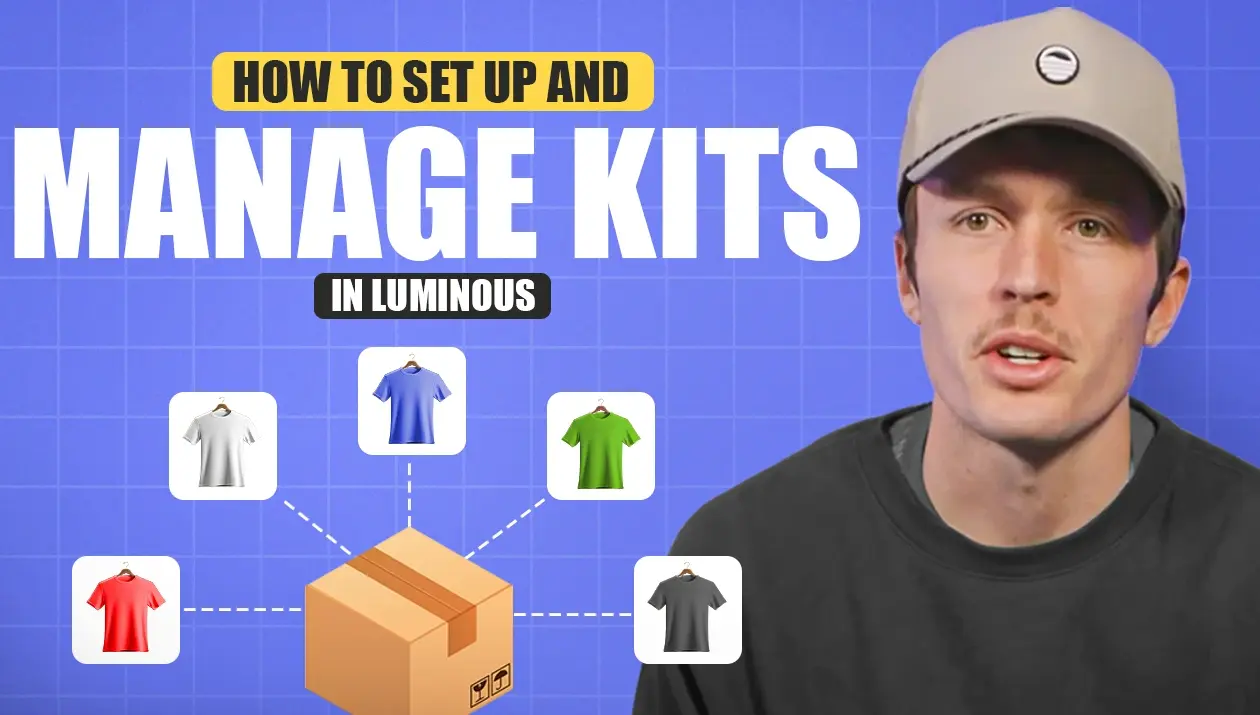
Kits, also known as bundles, are groups of products sold together but fulfilled as individual components. For example, a kit might be a three-pack of T-shirts or hats. Kits differ from preassembled or manufactured products, as they do not require significant assembly before fulfillment.
This guide explains how to create and manage kits in Luminous, including inventory behavior and how they integrate with sales channels.
Step 1: Understand Kit Behavior
- Inventory Calculation in Luminous:
Luminous determines kit inventory based on the available inventory of its components.- For example, if you have 100 hats and a two-pack hat kit, Luminous will calculate the kit inventory as 50.
- External Warehouse Behavior (e.g., FBA):
- For external warehouses like FBA, inventory calculations differ. If you have 100 preassembled two-pack hat kits stored at an external warehouse, Luminous will reflect 100 units as it recognizes them as standalone products.
Step 2: Create a Kit
- Navigate to Create:
- Click Create in the Luminous dashboard.
- Select Kit as the Product Type:
- Change the Product Type from Product to Kit.
- Input Basic Details:
- Enter a name for the kit (e.g., Test Three-Pack).
- Provide a SKU for the kit.
- Add category tags and other relevant information.
- Add Kit Items:
- Under Kit Items, include the components of the kit.
- Example: Add three hats or mix and match items as needed.
- Under Kit Items, include the components of the kit.
- Save the Kit:
- Click Create to finalize the kit.
Step 3: View and Manage Kits
- Sort by Product Type:
- Navigate to the product list and sort by Product Type to view all kits.
- Sales Channel Integration:
Step 4: Customize Packing Slips and Pick Lists
- Warehouse Fulfillment Options:
- You can customize packing slips or pick lists to display:
- Kit SKU only
- Kit components only
- Both the Kit SKU and its components
- This flexibility ensures efficient picking, packing, and fulfillment by warehouse staff.
- You can customize packing slips or pick lists to display:
Benefits of Using Kits in Luminous
- Improved Sales Reports and Forecasting:
- Sales data reflects individual component sales, even when orders come in as kits.
- Enhanced Flexibility:
- Easily create bundles with multiple items and manage inventory accordingly.
- Warehouse Efficiency:
- Customizable packing and pick lists streamline order fulfillment.
Kits vs. Bills of Materials
Use a kit when the bundle is picked together at fulfillment, like a three-pack of t-shirts. There's no production step. The kit's available quantity is calculated from its components, and selling a kit deducts each component.
Use a bill of materials (BOM) when components are combined into a new finished product ahead of time through manufacturing or assembly, like ingredients that become a protein bar. The finished good has its own inventory once it's built. See How to Set Up a Bill of Material (BOM) in Luminous.
Common Questions
How does Luminous calculate kit inventory? It shows the maximum number of kits you can make from current component stock. With 100 hats and a two-pack kit, the kit shows 50.
Why does my kit at FBA show a different number? When inventory is pulled from an external warehouse like FBA, Luminous uses the count that warehouse reports, because the kit has already been put together there as its own product.
Can a kit include different products? Yes. You can add multiple quantities of one item, or mix different items, under Kit Items.
How do kits show on packing slips? You choose: kit SKU only, components only, or both. See How to Customize Packing Slips in Luminous.
By following these steps, you can efficiently create, manage, and fulfill kits in Luminous.
Video transcript
What a kit is
Hey there, let's talk a little more about kits, also known as bundles. A common use case for a kit might be a three-pack of t-shirts or a three-pack of hats. Kits are typically groups of products or bundles where, at fulfillment, you grab one from here, one from here and one from there.
A kit typically isn't used for a preassembled product or anything that requires manufacturing or really heavy assembly.
How kit inventory is calculated
So how do kits behave in Luminous? The inventory for a kit is based on the maximum number of kits that can be created from the component inventory. For example, if I have 100 hats and a two-pack kit, that two-pack kit will show 50 in inventory.
Kits at external warehouses like FBA
It's a little different for external warehouses such as FBA. Say you have a two-pack of hats at the FBA warehouse and you have 100 of those units. If it's an external warehouse and we're pulling inventory from it, Luminous won't do those additional calculations. We'll just pull those 100 units, because we recognize that, coming from something like FBA, the kit has already been put together and is its own product.
Create a kit
Now let's talk about creating kits and what that looks like in the system. Go up to Create and change the product type from Product to Kit. Give it a name, maybe Test Three-Pack, and include a SKU for it. You can also add a category, tags and other details.
The biggest change is Kit Items, where you include the components. Maybe we add three of this, and maybe one more additional item. You have a lot of flexibility to add multiple different items. Then we'll create it.
Find your kits
You can sort kits versus products using the Product Type filter. If I sort by Kit, I can see all the kits that have been created.
Selling kits on your channels
When this SKU gets sold on Shopify, Etsy or another channel, it comes in and deducts from each of the components. This helps with sales reports and forecasting, because you'll know the specific products that were sold, even if the order came in as a kit.
Kits on packing slips and pick lists
The other useful thing in Luminous is that when you produce a packing slip or pick list, you can choose whether to show just the kit components, just the kit SKU, or the kit SKU and its components. That helps the people in the warehouse who are picking, packing and ultimately fulfilling those orders. Thanks.