

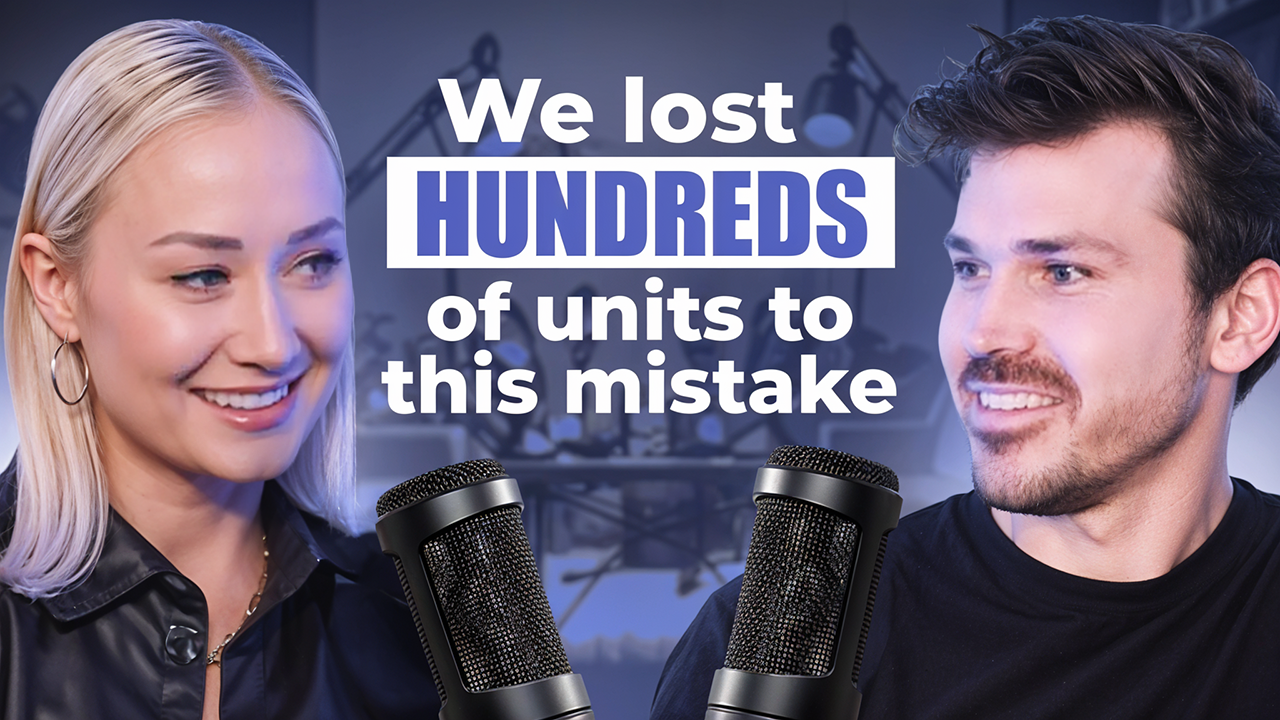
We Lost HUNDREDS of Units to This Mistake

Listen On

.svg)

Meet Paige Hope
Paige Hope is a seasoned entrepreneur who successfully transitioned from the tech world to the forefront of clean beauty. After co-founding the tech platform Current and overseeing its acquisition by Pattern, Paige used her experience advising nine-figure e-commerce brands to launch Elan Pure, a hormone-safe skincare line. Driven by a personal mission to eliminate endocrine disruptors following her sister’s autoimmune diagnosis, Paige spent two years and 16 formulation rounds perfecting a non-toxic, foam-and-lotion hybrid self-tanner. Known for her "gritty," self-funded approach, she favors lean operations and organic community growth, successfully scaling her brand through a massive affiliate network and a dominant presence on TikTok Shop.
Episode Synopsis
What does it really take to build a hormone-safe beauty brand that can survive the move from startup to scale? Paige Hope, CEO of Elan Pure, joins Jared Ward to pull back the curtain on the "no-fluff" operational reality of the skincare industry, including a crystallization crisis that cost the brand hundreds of units. We break down the raw economics of US manufacturing, how to negotiate 3PL labor fees, and why a lean team of contractors often outperforms a bloated payroll.
Don’t wait for a "crystallization crisis" to realize your systems can't keep up. Luminous is the ecommerce operations platform built to bridge the gap between startup and enterprise, giving you the real-time visibility needed to manage a complex supply chain without the overhead of a bloated ERP. From mastering inventory management to streamlining manufacturing and 3PL workflows, we help you maintain the lean, high-performance team required for scaling. Book a free demo today to secure your operational future.
Ops Unfiltered Episode 51 unpacks:
In this episode, Elan Pure CEO Paige Hope joins Jared Ward to reveal the "no-fluff" operational reality of scaling a hormone-safe beauty brand, from navigating a costly manufacturing crisis to managing lean teams and 3PL economics for sustainable growth.
- Paige Hope shares the "gritty" reality of developing a non-toxic skincare formula, which required 16 rounds of iterations over two years to find a manufacturer willing to avoid endocrine-disrupting preservatives.
- She reveals the operational crisis that occurred three months after launch when their foaming agent began to crystallize in cool temperatures, necessitating massive discounts to sell through affected inventory and a complete formula overhaul.
- Find out what Paige recommends for maintaining a lean, self-funded operation, including using a 1099-heavy team, negotiating 3PL labor fees into P&L calculations, and prioritizing organic affiliate marketing over paid ad spend during the early scaling phase.
Jared Ward: 0:06Welcome to season two of Ops Unfiltered. Our first guest this season was Paige Hope. She's the CEO and founder of Elan Pure. She's worked with Pattern. She founded tech company, sold it, and most recently she started her own skincare brand. This episode is amazing if you are a potential founder of a skincare or a CPG brand and you're curious about how to set up supply chain, manufacturers, fulfillment, the overall operations of a company like Alan Pure and how to be successful. They have absolutely killed it with organic content and they're crushing it on TikTok shop. I hope you guys can get a lot of value out of this. Paige was an amazing guest, super bubbly, super nice, and shared a lot of valuable information. Paige, welcome to Ops Unfiltered. Really excited to have you on.
Paige Hope: 0:46
We are so excited to be on.
Jared Ward: 0:48
Of course. I've seen you on all of the local Utah podcasts.
Paige Hope: 0:53
I have been feeling like a local celebrity these days. I'm not gonna lie to you.
Jared Ward: 0:57
That's right. So let's skin to your background real fast. So Ops Unfiltered is about diving into the dirty operations of modern commerce businesses. So you are the founder of Elan Pure. Is that how I pronounce it, by the way?
Paige Hope: 1:11
Yes, you did. Now we have a lot of people that say Elan Pure, but it is French and it stands for energy and confidence. So it's technically pronounced Elon. So you did it correctly.
Jared Ward: 1:20
Awesome. Okay. Well, let's start there. What is Elan Pure? How did you start it? And give us- Wow.
Paige Hope: 1:27
I never know how far to go in these questions because it's it's really been on the forefront of my mind for many, many years. Back in 2020, my sister was diagnosed with an autoimmune disease, and then I was battling my own hormonal challenges. And so I was building a tech company at the time and trying to figure out how I could build a product line that could actually support my sister and I, right? But I had no experience in this, right? And what I started doing was just taking small actions towards this. So I started eliminating all products that had endocrine disruptors in it and started to realize that there's a huge opportunity in the market for self-tan. The beauty of that is when I was building this, well, it's current. So if anyone knows of current, now it's pattern creators. I was able to work with hundreds of e-commerce brands and understand how to go about this, how to work with the chemist, what that looks like. So I just started diving in and I started working with the chemist.
Jared Ward: 2:27
Okay. So so you had a tech platform current that you were building. Yeah. It got sold to pattern and you're exposed to a bunch of brands and how they operate. What was the number one thing that you saw that led you to think, I want to start my own. I want to do this.
Paige Hope: 2:42
It's so funny because a lot of people ask me, like, how do you find your passion? Like, how do you know what like you should do? And I was like, Well, you just have to start doing things and see what like sparks something inside of you, right? Like you probably are the same. It's like you start to kind of uncover things that you're really good at. And then the more challenges you face, the more you realize, oh, I can actually do this. And you have the confidence. So the moment that I started building confidence that I could do this was when I had hundred million dollar CEOs reaching out to me and asking for advice with these e-com brands. And I was like, and and and it was so second nature, like the answer would just spew out of my mouth. And I'm like, okay, these people are coming to me for advice. They are worth well over what I'm worth. And I have the confidence now to do this. And so that's when I really took the plunge to go meet with a chemist and get things rolling on that.
Jared Ward: 3:34
Very cool. Okay. So how long have you been running and operating Elan Pure?
Paige Hope: 3:40
So it's going on two years. So when our company current sold to Pattern, I stayed on for about a year and behind the scenes I was actually developing the product. It took us, and you're familiar with the manufacturing world. So it took us multiple manufacturers to nail this down because it's different in market. We're a foam and lotion hybrid and we're non-toxic. And everyone told us they wanted to put in these crappy preservatives. So no one wanted to work with us really. And so we had to find the right ones. And we're still like we're always shopping, right? Like e-com brands are always shopping.
Jared Ward: 4:12
Diving more into the operations. Um, so many modern CPG brands or beauty brands. A big part is setting up your supply chain. Yeah. So how did how did you find your manufacturers? What was the setup? Who, who did you go to?
Paige Hope: 4:28
Yeah. It was kind of gritty. It was mostly just me Googling and trying to figure out ones around here.
Jared Ward: 4:33
You were first looking for US manufacturers. Yeah. Why not overseas manufacturers?
Paige Hope: 4:37
You know what's crazy? Because there's not a lot of education out there on what to do and how to do it. And I was like talking to and a lot of these brands, the crazy thing is is even these brands that are doing millions and millions in revenue are still paying crazy, crazy prices to manufacturers. Cause even the econ people that are seasoned don't understand the manufacturing world. Like it actually is mind blowing. So I would ask people for advice. I would do that. And then I was like, wait, that's ridiculous. I need to go this way, you know? And so it's actually really fascinating to see even the well-seasoned brands, there's always enhancements brands can make. It's it's absolutely crazy. So I went the Google route. I went, you know, I'm I'm not one to shy away from asking people, you know, for advice, feedback, et cetera. So I'm like going from people to people and going to events and asking people. And that's really how it kind of started evolving was I'd work with one and then someone would say, Oh, they're the worst. Don't go with them anymore. You know, and then you just start to all kind of help each other out, if that makes sense. Uh-huh. But as you can tell, I mean, it wasn't a great start. And it took us 16 iterations to even get our product.
Jared Ward: 5:44
16 iterations. 16. Walk me through that formulation for skincare brands and beauty brands. It's a very difficult part of product development. So what I mean, what is what is the number one lesson that you would share with somebody formulating a non-toxic Yeah.
Paige Hope: 5:58
There are so many. Um, I would say on the manufacturing side, I burned cash. I'd never, I didn't read the fine print and understand what actually what it actually meant to work with this type of, say, manufacturer, right? Because you're they're taking sometimes upwards 90% margin, right? Screwing the brands, then and then screwing the consumer. So then you have to almost double your prices, right?
Jared Ward: 6:21
Why, why is that, do you think? Why why do they have such high margins for the new formulators, the new e-commerce companies that are coming in?
Paige Hope: 6:31
Well, I think that it's twofold. I think that sometimes they have to when it's smaller volumes, right? However, when the volumes increase and they're still taking crazy margins, I mean they're running a business too, right? Yes, like we all get that. But it's just this, it's this just this cycle. And I'm like, I don't how do you get out of the cycle? I don't know. You're here to tell me that.
Jared Ward: 6:57
Who did you ultimately end up going with? Like you you said you had six 16 rounds of formulation. Yeah. Oh my goodness. Yeah. What are some of the mistakes that you made in the formulation process?
Paige Hope: 7:07
So going in, and it was a lot of push and pull because of preservatives. Preservatives, a lot of preservatives on market are toxic and can lead to hormone disruption. And so a lot of that was testing different preservatives that are actually non-toxic. So we have two non-toxic preservatives. And even some manufacturers don't want to work with us because we're not willing to do like the high, high, high toxic ones, right? Okay. And so going through that process, I didn't go in with like clear, clear understanding of that, right? And then within the formulation phase, I did bring a whole list of ingredients that we could not have. So that's what I did of right. I would say to do, like if you're in this process right now, a couple of things to do right. Learn the fine print, right? Like talk to their customers and actually see and get real raw feedback. I didn't do that in the early days. Understand margins as your volumes increase, like have a really clear understanding of that in the very beginning. And then that was the last one to that I did right, was just going in and making sure they knew, like, hey, this is this is non-toxic.
Jared Ward: 8:15
It sounds like working with US manufacturers, it's you kind of just have to bite the bullet with the higher price points until you can actually scale up and have better margins. In your specific industry, what are some of the specific toxic ingredients that you should avoid? Even just like one or two.
Paige Hope: 8:34
Well, a lot of them like you'd be surprised. Red 40 is actually in a lot of self-tanners, specifically. No, make them and it's going into your bloodstream.
Jared Ward: 8:44
Is it just for the dye to make it regular?
Paige Hope: 8:46
Yep. So it can basically some some will put dyes in there to combat if some tans can be orange. Because there are two tanning agents in a tan, DHA and erythulose. And so people will put dyes in it, but you don't need to. We don't have any dyes in ours. And then we use organ it's about 80% organic ingredients in ours.
Jared Ward: 9:05
Why do big brands use toxic ingredients?
Paige Hope: 9:09
It's cheaper. Because dyes that are used in other countries, because Red 40 is dye is and a lot of harmful dyes are banned, right? They're gonna use food grade stuff like turmeric, beets, etc. So that's just, you know, it it's always you always have to follow the money trail, right? When you go to Europe and you're comparing fruit loops in the US versus fruit loops in Europe, it's very different. They don't have dyes in theirs and they have way less ingredients. It is absolutely the craziest thing in the entire world.
Jared Ward: 9:39
So what led you to find that out? Like crazy action. I mean, nowadays you see so many TikToks on this. Like there's so many viral threads on Red 40 and other toxic ingredients. But I mean, this was obviously TikTok existed back then, but I mean, I this stuff wasn't as viral. So how did you discover this?
Paige Hope: 9:59
It was all just research, and my sister really helped me too. She's an absolute genius. And because she had an actual autoimmune disease where she had to eliminate all of them because it was just whacking up her hormones, which we can get into breast cancer and and all of the other things that are out there because of the toxins in the world. But I won't get into that in this because there's a deep, deep rabbit hole. But some of the other ones include fragrance. Like fragrance can hide thousands of chemicals and it's not transparent. So when you see the word fragrance, you like it could be messing with you. Like men, testosterone is on the decline. More and more women are saying they have PCOS and other harmful hormone-disrupting diseases and illnesses because of so many of the toxic overloads that we have.
Jared Ward: 10:49
Wow. I know. Well, back to formulation, just to close the loop on that. How long did it take to get the final formulation for? Two years. Two years.
Paige Hope: 10:59
Two years. Oh, wow.
Jared Ward: 11:00
Yeah.
Paige Hope: 11:02
That's where I'm like, the heart and soul was in it, people. We got two years.
Jared Ward: 11:05
16 rounds, right? 16 rounds. So two years in formulations. You you must have launched with the perfect product, right?
Paige Hope: 11:12
Well, we thought, but three months in, we learned that our foam bottles crystallized when it was in cooler temperature. So our foaming agent was literally crystallizing. So people were sending in these videos of the foam coming out as a liquid. And we didn't know what the heck was going on. So I'm calling my chemist. I'm like, what is going on? It took us a whole week to actually identify the problem because a lot of people keep their home around 70 degrees, right? But the second, even if it went down to 69 in some homes, it was boom, right there. So what we did is we did massive, massive discounts to sell out of the inventory. Massive, which is what you gotta do. Trash some of them. And then for the rest, we just said, listen, if you set it over your heater or you set it in your warm garage, because this was in the summertime, it will go back down. And it was like the weirdest experience. Our customer support emails were just crazy. But you know what's crazy about the whole thing? Because we were up front and honest about it, they were so happy. And we gave away, once we had our new formula ready for them, we gave all of those people free bottles. That's awesome. Majority of those people, yeah.
Jared Ward: 12:23
So this is the sport, this is the spirit of the podcast, ops and filter. It's like, I mean, everybody jumping into a brand, like they're passionate about something, but there's always issues because they're inexperienced at certain things and they just learn the hard knocks just through experience and 16 formulations. Yeah. This reminds me of a clip from Did you see the Mr. Beast podcast recently? So he talks about um Mr. Beast has his biggest influencer, biggest YouTuber in the entire world. He has his own brands. One of them is Feastables. He talked about how when he first got into chocolate, uh, ignorance was the biggest problem. And he he was just like, you know what, chocolate shouldn't have those little divots in it. And so he did it like that. And he didn't get a packaging engineer. And so what he found out was he was opening the packaging. As soon as you would take one piece of chocolate, the rest would fall out. And because he didn't have divots in the chocolate, they would just explode and shatter onto a million pieces. So it's just, I feel like everybody goes through that in their operations. Like there's you just you don't know what you don't know. Do you use chat GPT to help bridge the knowledge gap?
Paige Hope: 13:32
We are using Chat GPT on the daily, let's be real. And you know what's so funny is I'm looking, I was just telling my friend this is a little off topic, but I can tell her, I can tell when she gives me a chat GPT response. And I'm like, okay, listen, for a heavy chat GPT user, just stop doing that and make it a little personalized. But no, we use it all the time. Like we're using it for all of our social content planning right now. Um, we're using it to know actually when to launch products that we have coming out. And we were going to launch our face tanning spray end of February, but now we are launching it for springtime because of travel size and it's gonna be a little bit better for traveling. So we totally adjusted our timeline through Chat GPT and our content strategy around that.
Jared Ward: 14:17
What did ChatGPT say to you?
Paige Hope: 14:19
ChatGPT basically said, Oh, I wish I had it. I could probably look it up. Yeah. It essentially said, if you want the highest amount of volumes right when you launch, launch this around traveling spring, your must-have travel hacks, do, do, do, do, do. Because everyone's everyone's already making their spring plans, right? And so we can lean on the travel size, but then also it's a natural glow because it's the face tanning spray. So you might be tan, you know, your whole body might be tan, but you might not want to put makeup on all the time when you're on a boat or whatever, whatever. So it's like just use our face tanning spray and it lasts a week. So that's very cool. Yeah. So it'll be fun. I'm super excited.
Jared Ward: 14:55
I want to pivot a little bit to we were talking about this before the podcast started. You're talking about how, yeah, man, I only we only have two full-time employees and a ton of contractors. I feel like that is how you succeed with a modern commerce brand. What do you, as an e-commerce founder, decide to hire for versus use fractional 1099s for?
Paige Hope: 15:17
So this is probably the question I get asked the most because a lot of founders, especially the ones that go the VC route, want to hire a bunch of full-time employees. I didn't go VC, I went the more gritty route. I'm self-funded. And so I have to be smart with my cash. But a lot of the people that, like you said, go the opposite direction, end up burning cash because people don't have enough to do. When you're launching a brand, it actually takes time to get your brand out there and testing. Once you actually have solidified that, which we feel like we're getting to this spot, I have really, I wish I could share this really piece of exciting news. Cut this out. We are literally have you guys seen so my content guy. He is friends, like because he's a model also, which that's a hack to your content person, they should have a full-time thing doing something content and creative related. And we're going to what do not put this it can't be on here. Yeah, it can't be on here. It's so crazy. And then the whole thing is like we're gonna we but anyways, okay. I'm so sorry. I just had to tell someone that's awesome.
Jared Ward: 16:21
Let's do a quick exercise because I I feel like this is incredibly useful. Let's list out all of the things and we can basically say going from zero to 10 million as a beauty brand. Like, what are the jobs that what are the different responsibilities that you have? And then you tell me, is it did you use a contractor or did you hire a full-time employee?
Paige Hope: 16:43
I think that's a I think that's a great idea. And I can also share how I started like as incrementally growing the team. First one design. That was actually my first contractor was designing the bottle. I did not feel like I could design it myself. A lot of brands do, but the branding was one where I hired immediately, not full-time, again, contractor to design the bottles, and then a content person to actually build out my branding with me. As you guys can see, like the branding, we have a very editorial vibe. And when you're beauty, like it has to be editorial vibe because people associate quality persona, right? Branding with quality products. And that's just the beauty industry. I'm not familiar with the the other industries, but just a little tidbit there.
Jared Ward: 17:27
That makes sense. Packaging. So like I know you said the bottle design, but like what about the packaging design? Because that's also contract. Contract. Okay. What about website development?
Paige Hope: 17:38
We literally just I did it as a founder. I believe that the founder at the very beginning, if you can take on, if you're getting it out, you're not funded outside, you should be able to take on that. It's so easy. We have a Shopify template and then I chat GPT'd some code to customize some things and nice, okay. Super easy. You can split it beside in 24 hours.
Jared Ward: 17:59
Shopify templates. Okay. Um what about fulfillment? Did you use a 3PL or did you get a warehouse?
Paige Hope: 18:06
I did a 3PL.
Jared Ward: 18:08
Okay. How do you choose the right 3PL?
Paige Hope: 18:10
I think for me specifically, what was important was I was going to get low rates. And so for me, I negotiated down low rates. When you're choo when you're working with other warehouses, you need to go through how much does it actually cost to add each product in and what's the actual labor fees? Because you have to build that into your P ⁇ L. Not enough people build in all these little small things into your PL to actually see what your contribution margin is. I basically chose the most the most inexpensive one.
Jared Ward: 18:43
Got it. Okay. So and you you basically just, I'm sure you probably just did this like on Excel. You're just calculating the future potential margins and baking it as much as you can.
Paige Hope: 18:52
Aaron Powell But I will say on that note, shipping from Salt Lake all the way to New York and other places, like as we're growing, we're already like, we gotta get a warehouse, like or we gotta get a 3PL in Texas or Kentucky or East and West Coast coverage. Yeah, you have to.
Jared Ward: 19:07
Yeah. And why is that?
Paige Hope: 19:10
Because it's just so much more expensive.
Jared Ward: 19:12
Because the zones, like the later zones.
Paige Hope: 19:15
Like Salt Lake, it's not that cheap to ship out of here. Yeah. If you're going, you know, all the way to there. Now Texas has a bunch of ports and it's like the cheapest in Texas. From what I found. Feel free to tell me otherwise if anyone knows.
Jared Ward: 19:28
Okay. Next, what about supply chain management? So, what I mean by that is purchasing forecasting. Do you handle that or an employee handles that?
Paige Hope: 19:38
Or I handle that right now.
Jared Ward: 19:39
Okay.
Paige Hope: 19:40
And I need someone else to.
Jared Ward: 19:41
Yeah. So you're almost to that stage where you're A to hide that like first ops hire. Okay. Really cool.
Paige Hope: 19:46
Well, I don't know. It I don't know if not full time. I'm very stingy on the full time right now.
Jared Ward: 19:51
As you should be. What about retail wholesale management?
Paige Hope: 19:54
So right now I'm handling the majority of that. Now I do have a gal who does 10 hours a month with us. Because we want to start getting ready for retailing. We're wholesaling right now. So she's going to build up our wholesale program. That's going to be primarily med spas, wellness, et cetera, that's going to then help fund retail. Before we go retail, which I will say we are talking to Nordstrom right now, but before we go full, full retail, they want you, like the Ultas, the Sephores, they want you to have a really large social following. And we're still early. And so we're going to we need to build that up a little bit more to then even before we even have the conversation with them.
Jared Ward: 20:32
Okay. Ads manager.
Paige Hope: 20:33
We do not, we are solely organic right now.
Jared Ward: 20:36
Oh. Yeah.
Paige Hope: 20:37
It's crazy.
Jared Ward: 20:37
We talk about that.
Paige Hope: 20:38
But I will be hiring a contractor soon.
Jared Ward: 20:40
Traditional D2C model is like it's just an arbitrage with meta or TikTok ads. So I'm I'm curious. Is this just a strategic move to build your brand?
Paige Hope: 20:50
It's just working because my background is creator marketing. And so we have 1,500 affiliates, and that is how we get all of our sales. Okay. Well dive dive into that.
Jared Ward: 20:59
Like what are some things that you do that are super successful that you wish other brands or that they would know?
Paige Hope: 21:05
Just leaning in and pouring into your affiliates because those are really the people that are the drivers. Like you look at TikTok shop, every other thing is someone selling something, right? But the creators that are actually like behind some of these brands, those are the ones that are out word of mouth. They're the ones that are like, hey, you should buy this. Those are the ones that are long term. I think ads are awesome and we're going to start that. But for us, we have to be incremental with our spend. And so until we feel like we're at a really good place, we're not going to touch this yet, which we're actually getting to a really good place. So we're going to, I'm starting to have conversations with some contractors right now on the ad side. But because we've been solely organic thus far and it's been fueling our business, we're like, let's just keep doing this until we know it's working fully. And then that's what we can do ads with. Because I think so many brands dive first into the ads and they are burning cash because they don't actually know who their audience is. Like, because honestly, when you launch a brand, you're kind of guessing. And then your audience tells you and they tell you how you should market to them. And then on the ad side, once you have all of that solidified, you're actually going to get conversions pretty on the spot. Like I feel like this is the best way to go about it. Launch an affiliate program first, get as much content as you can, and then get that content to then use for ads later.
Jared Ward: 22:25
That's awesome. Uh what do you think of UGC? It's like a trending topic on LinkedIn and socials. What is your view on UGC?
Paige Hope: 22:35
I think UGC, like user-generated content, is always going to be good, but because it's always so fabricated, like so many brands are like a lot of brands will actually hire models to do UGC, like scripted UGC. And so, yes, and some brands it works really great for ads, honestly. But I think what the net the new trend is going to be going forward is employee generated content, the employees, like why I'm backing this brand, why I'm excited about this. And then more of the customers versus all of these big creators, right? Like I think we're seeing the wave of these paid influencers kind of leaving. No one is, no one feels like their content is even relatable anymore. So it's like all of these customers that then turn into affiliates are going to be the raving fans that keep coming back. And that's the LTV we all want, right? Like we, as a new brand, we can't even measure LTV at this point, right? But it's like if we can build that relationship now and make sure they're always going to be coming back, then we have brand longevity and equity.
Jared Ward: 23:35
I feel like that's the trigger right there of turning on ad spin. Because you know if I'm gonna spend money to acquire a customer, they will come back. Correct. So sinking, it's not a leaky bucket.
Paige Hope: 23:44
Yep.
Jared Ward: 23:44
I want to dive into our our quickfire questions real fast. So we're gonna try to do like 30 seconds or less response.
Paige Hope: 23:51
Oh gosh. I'm always really bad at these ones.
Jared Ward: 23:53
What's one piece of advice you would go back and tell yourself before starting a lawn pure?
Paige Hope: 23:58
You can literally do anything. Like, don't stress. I think so many people let fear step in the way. And it's like just eliminate fear literally completely. I would have started this sooner.
Jared Ward: 24:09
What is setting a lawn pure apart from other products in the industry?
Paige Hope: 24:12
We are taking a wellness approach in beauty and a real wellness approach, a hormone-safe approach. A lot of brands will slap clean beauty labels on, but they're actually not hormone safe. And so we're changing that. And then our foam and lotion hybrid is a first of its kind.
Jared Ward: 24:28
Very cool. 3PL or your own warehouse?
Paige Hope: 24:31
3PL.
Jared Ward: 24:32
Leave it at that. Best advice when finding a manufacturer of skin products.
Paige Hope: 24:35
Make sure they have experience sourcing organic and non-toxic products.
Jared Ward: 24:40
If you could go back and change one decision in your career, what would you change?
Paige Hope: 24:43
Okay. I actually have a couple. I would have gone back and I would have actually learned finance earlier. Like my brain with finance still is like, I'm still, I'm honestly still refining my skills on finance. And then number two would be advocate for myself with higher salary. I was so excited to help build companies. And I've always been a giver, giver, giver. And I'm like the ideal employee, honestly, because like I'll just do so much around the clock. For like I did little to no pay. And it wasn't until I had a friend who was like, You're running this company. What are you doing? Like this is this is insane. So now I'm very cognizant of that. Like I can see myself in some of my employees actually.
Jared Ward: 25:25
Yeah.
Paige Hope: 25:26
And I know that everyone isn't getting paid what they are meant to right now. And they all know that. Like, right, as the company grows, they'll, you know. But it's important to me that as we grow, I am really giving back to those people because I was one of those people as well. That's awesome.
Jared Ward: 25:40
Well, also, how do you attract like-minded people?
Paige Hope: 25:44
That is that's a good question. So I actually have interview questions where I have all of my core values on it and I ask questions for each of those core values because you know this too. Like as you're building a company, you want people that you want to hang out with too, right? Like, yes, you're building a business, but you want to be excited to invest in them. You want to be excited to talk to them and get on meetings every day with them, right? And so for me, I'm like filtering that out constantly. And I'm very upfront with what my standards are, what I expect. And if it's it's not for everyone. Like building a startup is not for everyone. We are not for the, you know, just the nine to fivers. Granted, we have a lot of autonomy. So I don't care when they work, but it's like you know that you have to operate way up here because we gotta make this thing work.
Jared Ward: 26:32
You gotta care.
Paige Hope: 26:33
Yeah.
Jared Ward: 26:33
If you only had one sales channel for Elan Pure, what would you choose?
Paige Hope: 26:37
Probably TikTok. If I had to go full in on one. Okay.
Jared Ward: 26:42
Amazon, overrated, underrated.
Paige Hope: 26:44
You just have to do it. We're about to launch on Amazon. It's I you just have to be everywhere. Nowadays, e-com brands, you have to be everywhere. It's all about distribution, distribution, distribution. Even wholesale. I'm like, why are people not prioritizing getting into these different places like X, Y, and Z?
Jared Ward: 27:02
Mm-hmm. Amazing. Launching your first product and marketing it for sale, it's really difficult to plan how much inventory to purchase. It's super challenging. How did you do that?
Paige Hope: 27:12
Well, first off, I needed you guys, and I didn't know about you guys because it was not the way I wanted it to go. It was really just a guessing game. So I knew what the market was. I knew our TAM. And I was like, okay, but I also know we're gonna take an affiliate approach and we're gonna try to do solely organic in the beginning. So I was like, well, let's just launch with 5,000 to start. Let's see what happens, and then we'll do 10,000. That's literally how I did it. It was my brain being like, well, this is what I think we can do. I think we can maybe manage to get 90k a month. We'll see. And then we went from there. But we really didn't need you guys, and actually, we still need you guys.
Jared Ward: 27:55
Well, it's always difficult. The the new products, it's it's so difficult to predict to purchase. Just getting you're going off no data, or it's data of the market, which might not directly coincide with what you're selling. It's always yeah.
Paige Hope: 28:09
And I would say do lower quantities at the beginning because 90, I'm just gonna go on on a whim here and say 99% of the time you have to change your formula. And so if you do over that, it's like a waste of money. Also, because of you know, expiration dates and stuff, like you really want to make sure what you're going to market with is legit. Some manufacturers will do 2500, but you're just gonna be paying crazy, crazy prices. Okay. So 5k was kind of a safe bet for me.
Jared Ward: 28:39
Very cool. What platforms can we find you at?
Paige Hope: 28:41
You can find us everywhere at Elan_Pure. I'm pretty sure that's what we are everywhere. And we're starting to make some traction over on TikTok and Pinterest, actually. Recently we've been doing really well on Pinterest.
Jared Ward: 28:55
That's amazing. Okay. Well, we'll give you guys a follow. So anything else upcoming that you want to tell people?
Paige Hope: 29:01
Well, we have that face tanning spray coming in, you know, early spring. And then we are actually also getting into the wellness space.
Jared Ward: 29:10
Oh, okay. That'll be fun. Well, awesome. I really appreciate you coming on OPS Unfiltered page, and thanks.
Paige Hope: 29:18
It was so fun to be here. Thanks for having me.